Rise of the Machines: What AI-Driven Trading Is Doing to Forex Volatility — and How Retail Americans Can Fight Back
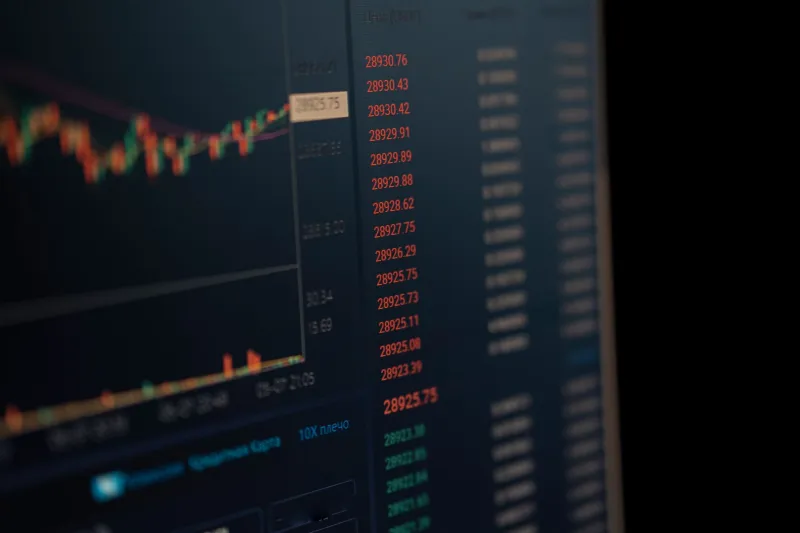
The forex market has always been fast. But in the past decade, it has become something qualitatively different — a battlefield where microseconds matter, where liquidity can evaporate in an instant, and where the participants setting prices are not human beings sitting at terminals but sophisticated algorithms processing millions of data points per second. For retail American traders, this shift is not merely academic. It has direct consequences for the spreads they pay, the slippage they absorb, and the strategies that still work versus those that have been quietly rendered obsolete.
Understanding the algorithmic environment is now a prerequisite for trading currencies intelligently.
How Algorithmic Trading Took Over the Currency Markets
Estimates from the Bank for International Settlements suggest that algorithmic and high-frequency trading now accounts for somewhere between 70 and 80 percent of daily forex volume in major currency pairs. The institutions behind these systems — large banks, proprietary trading firms, and increasingly hedge funds employing machine learning engineers — have invested billions of dollars into infrastructure designed to execute orders faster and smarter than any human could manage.
These systems operate across a spectrum. At one end sit simple rule-based algorithms that execute pre-programmed strategies — moving average crossovers, momentum signals, arbitrage between correlated pairs. At the other end are deep learning models that ingest news feeds, central bank communications, order book data, and even satellite imagery to generate probabilistic forecasts of short-term price movement. The gap between these two poles is widening rapidly as computational costs fall and data availability expands.
For the average American retail trader operating through a standard forex broker, this means the counterparties on the other side of virtually every trade are, in some form, automated.
The Flash Event Problem: When Algorithms Amplify Chaos
One of the most visible — and dangerous — consequences of algorithmic dominance is what market observers now call the flash event: a sudden, dramatic price dislocation that occurs within seconds and frequently reverses just as quickly, leaving retail traders caught in the gap.
The January 2015 Swiss franc unpegging remains the textbook example. When the Swiss National Bank unexpectedly abandoned its euro floor, algorithmic systems simultaneously pulled liquidity from the CHF pairs, causing spreads to balloon from a few pips to hundreds of pips within moments. Retail traders with stop-loss orders found those orders executed at prices dramatically worse than anticipated — a phenomenon known as gapping — while the algorithms that triggered the cascade had already repositioned.
More recent examples include the 2019 Japanese yen flash crash, which occurred during thin Asian session trading hours, and numerous smaller dislocations tied to Federal Reserve communications. The pattern is consistent: automated systems react faster than human market makers can reprice, liquidity temporarily collapses, and retail participants absorb the cost.
For American traders, the practical implication is that traditional stop-loss placement strategies developed in a pre-algorithmic era may no longer provide the protection they appear to offer.
Price Discovery in a Machine-Dominated Market
Beyond flash events, algorithmic trading has altered the fundamental process of price discovery — the mechanism by which markets incorporate new information into asset prices.
Historically, price discovery in forex was a relatively gradual process. A trader in New York would read a jobs report, assess its implications for Federal Reserve policy, and adjust their EUR/USD position over minutes or hours. Today, natural language processing systems parse Federal Reserve statements in milliseconds, sentiment algorithms scan social media for geopolitical signals, and statistical arbitrage bots exploit pricing discrepancies across dozens of venues simultaneously.
The result is that by the time a retail trader has processed a news event and attempted to trade on it, the information has typically already been priced in. The edge that once came from being well-informed has been compressed almost to zero for short-term directional trades.
This does not mean retail traders are without advantage. It means the advantages available to them have shifted.
Where Retail Traders Still Have an Edge
The good news is that algorithmic systems, for all their speed and computational power, have well-documented weaknesses that informed retail traders can exploit.
Longer time horizons remain underserved. High-frequency algorithms are optimized for short-term profit extraction. They are largely indifferent to — and often poorly equipped to handle — macroeconomic trends that play out over weeks or months. A retail trader who develops a well-reasoned view on US dollar strength based on Federal Reserve policy divergence from the European Central Bank, and expresses that view through a position held over several weeks, is operating in a space where algorithmic noise is largely irrelevant.
Structural inefficiencies in exotic pairs persist. The algorithmic arms race has been most intense in major pairs like EUR/USD and USD/JPY, where liquidity is deepest and competition is fiercest. In less-traded pairs — certain emerging market currencies, for instance — the algorithmic presence is thinner, and human analysis retains more relative value.
Patience around news events pays differently now. Rather than attempting to trade the initial spike following a Federal Reserve announcement or a US nonfarm payrolls release — a moment when algorithmic systems dominate and spreads widen — experienced retail traders increasingly wait for the dust to settle and trade the secondary move, which tends to reflect genuine market consensus rather than algorithmic overreaction.
Adapting Your Execution Strategy
Beyond strategy selection, the mechanics of trade execution require recalibration in an algorithmic environment.
Limit orders have become more valuable relative to market orders. When a retail trader submits a market order during a high-volatility period, they are effectively asking the algorithm-dominated market to fill them at whatever price is available — a request that can be expensive when liquidity is thin. Limit orders, by contrast, define the acceptable price and prevent the trader from being filled at an unfavorable level, though they introduce the risk of non-execution.
Traders should also reconsider the timing of their activity. Algorithmic activity is typically most intense — and spreads are widest — in the seconds immediately surrounding major data releases and during the overlap of the London and New York sessions when volume peaks. For retail participants without co-located servers and fiber-optic connections to exchange infrastructure, competing in those windows is asymmetric in the wrong direction.
Finally, understanding your broker's execution model matters more than it once did. Brokers operating a dealing desk model may be internalizing orders and taking the other side of client trades, while those using straight-through processing route orders directly to liquidity providers. In an algorithmic market, the distinction has real implications for the quality of fills a trader receives.
The Informed Trader's Imperative
The rise of algorithmic trading in forex is not a development that retail American traders can afford to ignore or dismiss as someone else's problem. It has fundamentally altered the terrain — compressing certain edges, creating new ones, and changing the risk profile of strategies that worked reliably in earlier market conditions.
The traders who will navigate this environment successfully are those who understand where algorithms dominate and adapt accordingly: shifting toward longer time horizons, exercising greater discipline around execution, and focusing their analytical energy on the areas of the market where human judgment still commands a premium.
The machines are faster. But they are not always smarter — and in forex, patience and structural awareness remain deeply human advantages.