Reading Bitcoin's Pulse: How Crypto Volatility Has Become an Early Warning System for Forex Traders

For most of its existence, Bitcoin was treated as a financial outlier — a speculative curiosity operating in a silo far removed from the orderly world of currency exchange. That separation no longer holds. Over the past several years, the relationship between cryptocurrency markets and traditional forex pairs has grown increasingly legible, and for American retail traders willing to pay attention, Bitcoin's price behavior has begun functioning as something genuinely useful: an early warning system for currency market volatility.
This is not about trading crypto. It is about using the signals that digital assets generate — signals rooted in real capital flows, institutional risk appetite, and macro sentiment — to position more intelligently in the currency markets you already operate in.
Why Bitcoin and Forex Are More Connected Than They Appear
The intuitive assumption is that crypto and forex operate on entirely different rails. One is decentralized, largely unregulated, and driven by speculative momentum. The other is the world's largest and most liquid financial market, shaped by central bank policy, trade balances, and geopolitical risk. These descriptions are accurate, yet they obscure a growing point of convergence: institutional capital.
As hedge funds, proprietary trading desks, and large asset managers have expanded their crypto exposure over the past half decade, the boundaries between risk asset classes have blurred. When institutional players reduce risk across their portfolios — often in response to macro stress — they tend to exit Bitcoin and other volatile assets simultaneously with high-beta currencies such as the Australian dollar, the New Zealand dollar, and emerging market currencies. The reverse is also true: risk-on rallies in crypto frequently accompany strength in commodity-linked and growth-sensitive forex pairs.
The result is a pattern of correlated behavior that, while imperfect, carries real informational value.
The Risk Sentiment Connection
At its core, Bitcoin has become a barometer for global risk appetite. This is the lens through which forex traders should interpret its movements.
When Bitcoin drops sharply — particularly during periods of low trading volume or without obvious crypto-specific news — it often reflects a broader pullback in speculative positioning. In forex terms, this tends to precede weakness in currencies like AUD/USD and NZD/USD, as investors rotate toward safe-haven assets including the U.S. dollar, the Japanese yen, and the Swiss franc. Conversely, a sustained Bitcoin rally, especially one accompanied by rising trading volumes and positive on-chain metrics, frequently signals a broader appetite for risk — conditions under which higher-yielding and commodity-linked currencies tend to appreciate.
For American traders focused on major and minor pairs, monitoring Bitcoin's 24-hour price action before the New York session opens can provide a useful read on the risk environment before conventional economic data or news flow makes that sentiment explicit.
Specific Correlations Worth Tracking
Not all forex pairs respond to crypto signals with equal sensitivity. Some relationships have proven more consistent than others.
AUD/USD and BTC/USD have demonstrated a notable positive correlation during risk-on and risk-off episodes. Australia's economy is heavily tied to commodity exports and global growth expectations — dynamics that align with the macro conditions driving Bitcoin's broader cycles.
USD/JPY often moves inversely to Bitcoin during stress events. When crypto sells off aggressively, the yen tends to strengthen as investors seek the relative safety of Japanese assets, pushing USD/JPY lower. Watching for sharp intraday Bitcoin declines — particularly those exceeding three to five percent within a few hours — can serve as a preliminary signal to reassess long USD/JPY positions.
Emerging market currency pairs, including USD/MXN and USD/ZAR, have also shown sensitivity to crypto-driven risk sentiment shifts. These pairs tend to weaken (meaning EM currencies depreciate against the dollar) during episodes of broad crypto selloffs, particularly when those selloffs coincide with dollar strength.
It bears repeating: these correlations are tendencies, not certainties. They are most reliable when confirmed by other indicators and should never be used as standalone trading triggers.
How to Apply This Without Trading Crypto
The practical application is straightforward and requires no crypto account, no digital wallet, and no exposure to blockchain-based assets. What it requires is a reliable data source and a disciplined analytical framework.
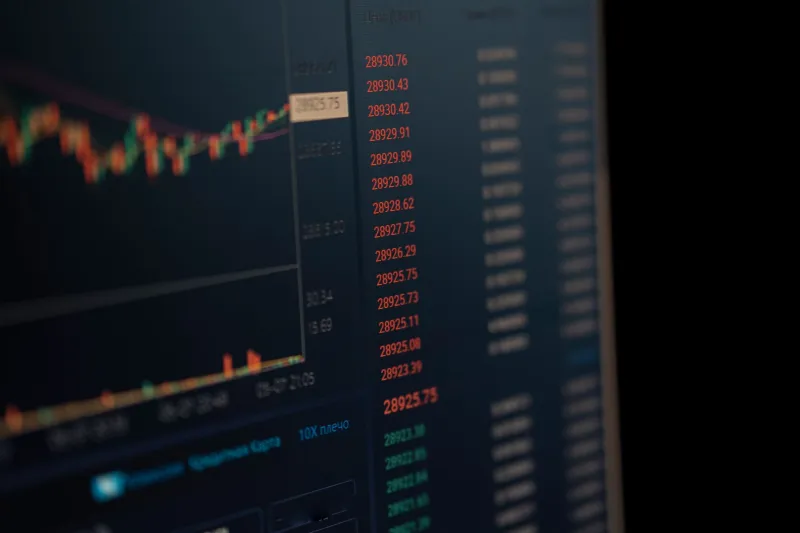
First, incorporate a Bitcoin price chart into your pre-session routine. Free platforms such as TradingView allow you to display BTC/USD alongside your preferred forex pairs without cost or complexity. Look specifically at directional momentum, volume, and whether price action is breaking or respecting key technical levels.
Second, contextualize what you observe. A Bitcoin drop of two percent during a quiet Asian session carries different implications than a ten-percent collapse following a major regulatory announcement. The former may reflect routine rebalancing; the latter is more likely to generate genuine risk-off pressure across correlated markets.
Third, use crypto signals as a filter, not a trigger. If your technical analysis on EUR/AUD already suggests a potential short setup, and Bitcoin is simultaneously exhibiting risk-off behavior, that confluence strengthens your conviction. If crypto signals contradict your primary analysis, treat that as a reason to wait rather than a reason to act.
Finally, pay attention to divergences. If Bitcoin rallies sharply but traditional risk currencies fail to respond in kind, that disconnect can be informative — it may indicate that the crypto move is idiosyncratic rather than macro-driven, or that forex markets are pricing in factors that crypto traders are not yet considering.
The Institutional Flow Angle
Beyond sentiment, there is a more mechanical reason why crypto and forex markets interact: fiat currency flows. When large sums move into or out of crypto markets, those transactions pass through traditional banking and payment infrastructure. Significant dollar-denominated crypto purchases create demand for USD at the margin; large-scale exits convert back into fiat, often into dollars or euros. During periods of extreme crypto activity — major exchange listings, ETF-related inflows, or post-halving accumulation phases — these flows can exert measurable, if temporary, pressure on currency pairs.
For American traders, this is particularly relevant in the context of Bitcoin ETF products, which have drawn substantial institutional participation since their U.S. approval. Monitoring ETF inflow and outflow data provides another layer of signal about the direction and scale of capital movement between the crypto and traditional finance ecosystems.
A Legitimate Tool, Properly Bounded
The goal here is not to transform forex traders into crypto enthusiasts. It is to expand the analytical toolkit available to market participants who operate in a world where capital moves faster and across more asset classes than it ever has before. Bitcoin's volatility, once considered purely a liability, now carries information — information about risk appetite, institutional positioning, and macro sentiment that arrives, in many cases, before it surfaces in currency markets.
Used carefully, alongside conventional technical and fundamental analysis, this cross-market awareness can meaningfully improve the timing and quality of forex decisions. At CentraCurrency, we believe smarter trading begins with a wider field of view — and right now, that field extends further than most traders realize.