Purchasing Power as a Profit Engine: How Inflation Divergence Across Borders Creates Real Opportunities for American Traders and Expats
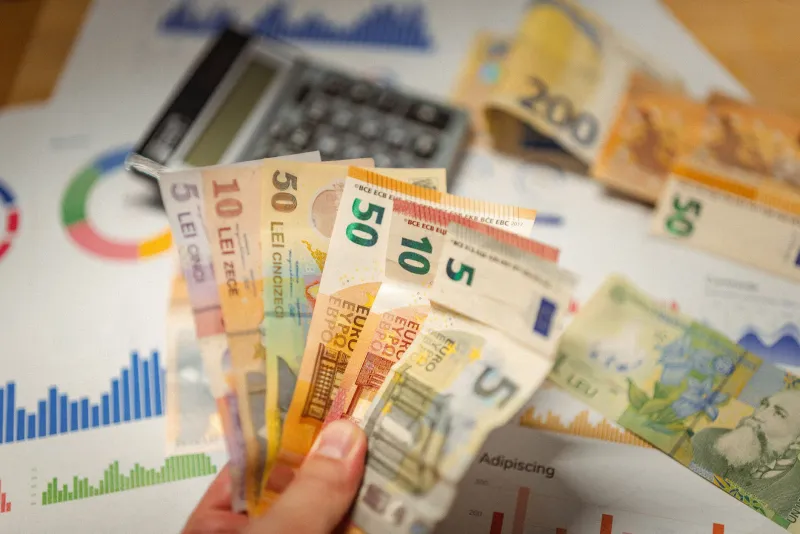
Inflation, for most Americans, is something to endure — a slow erosion of purchasing power reflected in grocery bills, energy costs, and rising rent. But viewed through a global lens, inflation is rarely uniform. Different economies heat up and cool down at different speeds, and those divergences create price gaps that sophisticated traders, expats, and internationally mobile professionals can exploit in meaningful ways.
The concept is rooted in a principle economists call purchasing power parity, or PPP. In theory, identical goods should cost the same across countries once you account for exchange rates. In practice, they rarely do — and the distance between theory and reality is where opportunity lives.
What Purchasing Power Parity Actually Tells You
Purchasing power parity is a framework for comparing the relative value of currencies based on the cost of a standardized basket of goods. When a country experiences inflation significantly faster than its trading partners, its currency tends to depreciate over time to restore equilibrium. When it experiences slower inflation — or outright deflation — its currency often strengthens.
The Economist's well-known Big Mac Index is a simplified illustration of this concept, but the underlying logic applies to everything from real estate to manufactured goods to professional services. When a currency has not yet adjusted to reflect its country's inflation reality, a window opens.
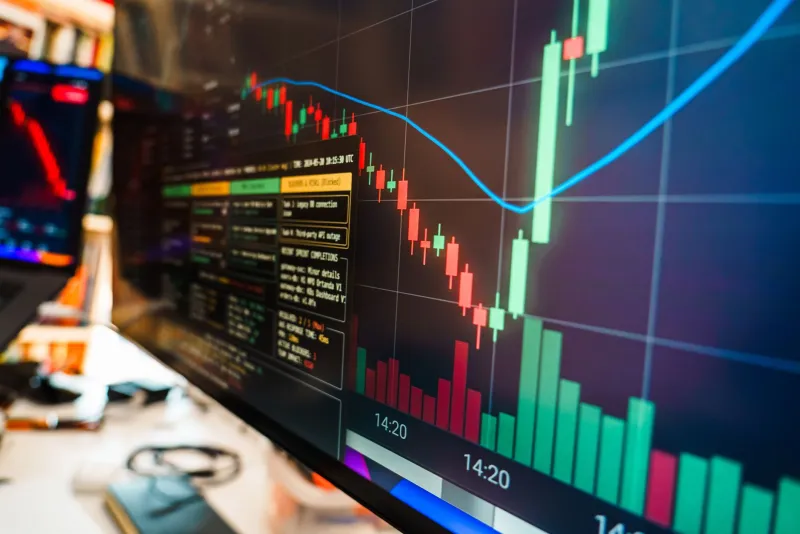
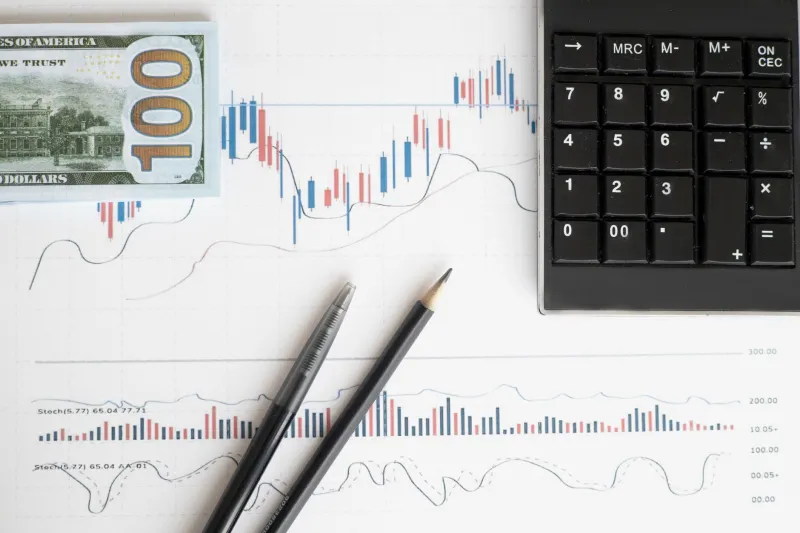
For American traders, these windows are visible in forex price action, in commodity import/export dynamics, and in the lived experience of anyone who has spent time working or traveling across multiple countries.
The Divergence Is Real — and It's Wide Right Now
Consider the spread of inflation outcomes across major economies in recent years. The United States experienced a significant inflation surge beginning in 2021, with the Consumer Price Index peaking above 9 percent in mid-2022 before gradually declining. Meanwhile, countries like Japan maintained near-zero or even negative inflation for extended periods, while several Latin American and Eastern European economies battled double-digit price increases.
Those divergences did not go unnoticed by currency markets. The Japanese yen weakened substantially against the dollar as the Bank of Japan held rates near zero while the Federal Reserve aggressively tightened. Conversely, currencies in high-inflation emerging markets often depreciated even faster than their domestic price levels rose — creating a compounding effect for dollar-denominated investors.
The trader who understood this dynamic early — not just as an economic observation, but as a forex positioning signal — had a meaningful edge.
Three Practical Channels for Capturing Inflation Arbitrage
1. Currency Positioning Around Inflation Data Releases
Monthly CPI reports, producer price indices, and central bank inflation forecasts are among the most market-moving data points in forex. When a country's inflation reading comes in above expectations, it typically signals that the central bank may need to raise interest rates, which strengthens the currency. Below-expectation readings suggest the opposite.
American traders can build a systematic approach around these releases by monitoring the economic calendars of multiple central banks simultaneously — not just the Federal Reserve. When U.S. inflation is cooling while a trading partner's is accelerating, the relative interest rate outlook shifts, and the currency pair tends to follow.
The key is not to react impulsively to a single data point, but to track the trend. Persistent inflation divergence is far more powerful than a single monthly surprise.
2. Commodity and Import Price Gaps
Inflation arbitrage is not limited to currency trading. Americans who source goods or services internationally — whether for business or personal use — can benefit directly from price divergences that haven't yet been priced into exchange rates.
Consider a U.S.-based importer purchasing manufactured components from a country experiencing high domestic inflation but whose currency has not yet depreciated proportionally. That importer is effectively paying above-market prices in real terms. The reverse is also true: when a country's currency has weakened faster than its inflation rate, dollar-denominated buyers gain outsized purchasing power.
Freelancers, remote workers, and small business owners who pay for services across borders can apply the same logic. A software development team based in a country with 20 percent annual inflation but a currency that has only depreciated 10 percent against the dollar represents a temporary pricing advantage for U.S.-based clients.
3. Real Asset Positioning in Undervalued Markets
For longer-term investors and expats, inflation divergence can signal windows for real asset acquisition — particularly real estate — in markets where local prices have not yet risen to reflect currency weakness. When a country's currency depreciates sharply due to inflation fears, dollar-denominated buyers can effectively purchase assets at a significant discount relative to historical valuations.
This strategy carries real risk and requires careful due diligence, including an understanding of local property law, capital controls, and repatriation rules. But for American investors with the knowledge and risk tolerance to navigate those complexities, the opportunity is genuine.
Reading the Signals: What to Watch
Executing an inflation arbitrage strategy requires monitoring several data streams simultaneously. The most important include:
- Headline and core CPI readings from the U.S., the Eurozone, the U.K., Japan, and major emerging markets
- Central bank policy statements, which telegraph how aggressively each institution intends to respond to inflation
- Real interest rate differentials — nominal rates minus inflation — which drive long-term currency flows more reliably than nominal rates alone
- PPP-adjusted exchange rate models, which compare current spot rates to theoretical fair value estimates
- Commodity price movements, since many currencies are closely correlated with the price of oil, agricultural products, or industrial metals
The intersection of these signals — particularly when multiple indicators point in the same direction — is where conviction trades are built.
The Risks You Cannot Ignore
Inflation arbitrage is not a guaranteed profit mechanism. Currency markets are shaped by far more than inflation differentials alone. Political instability, capital controls, sudden shifts in risk appetite, and central bank intervention can all disrupt even well-reasoned positions.
Emerging market currencies, in particular, carry liquidity risks that can make exits difficult during periods of stress. And for expats or travelers attempting to exploit price gaps in daily life, logistics, legal compliance, and tax obligations can offset theoretical gains quickly.
American traders should also be aware that positions in currency pairs involving countries with capital controls or restricted convertibility may carry regulatory exposure. Always verify the legal status of any currency pair or cross-border financial activity before committing capital.
Turning Inflation From a Threat Into a Tool
For most Americans, inflation is a passive experience — something that happens to them. But for those with a global perspective and the analytical framework to match, inflation divergence is a dynamic that can be studied, anticipated, and, in the right circumstances, traded profitably.
Purchasing power parity won't tell you exactly when a currency will correct, but it tells you the direction in which pressure is building. Combine that with real interest rate analysis, central bank positioning, and a disciplined approach to risk management, and inflation stops being a threat to your portfolio — and starts becoming a signal worth following.
The global economy does not move in unison. That lack of synchronization is the foundation of every meaningful arbitrage opportunity in currency markets. The traders and investors who learn to read it clearly are the ones who exchange smarter, transfer faster, and trade bolder.